 CSC News
 Table of Contents
Satellite cybersecurity advances as Spire Global wins a contract to design, build, and operate eight satellites for Deloitte’s on-orbit program.
The spacecraft will carry Deloitte’s Silent Shield intrusion detection and radio-frequency/geolocation payloads to support commercial and government missions.
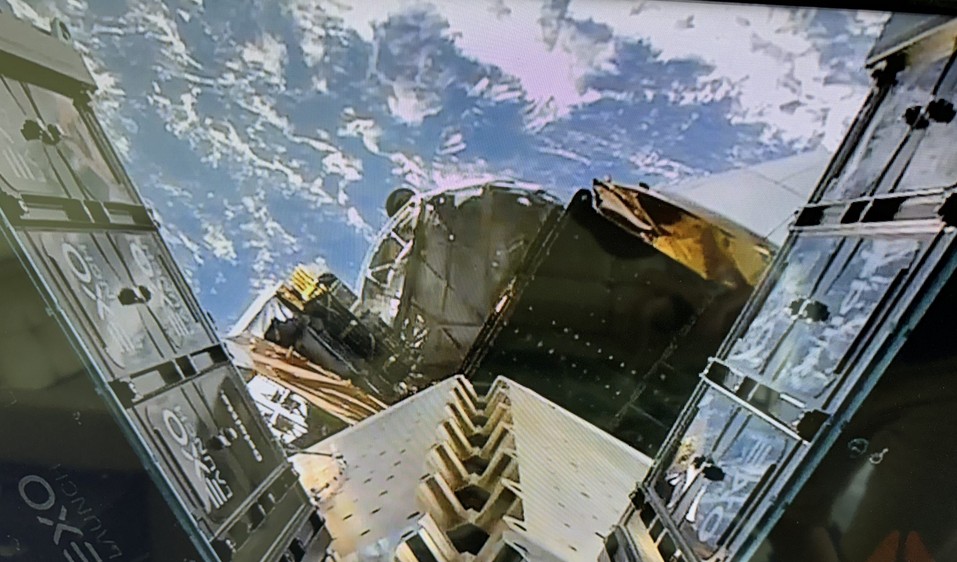
The deal expands a partnership validated by Deloitte‑1 on SpaceX’s Transporter‑13 rideshare, the first node in a planned nine‑satellite cyber defense testbed.
Satellite Cybersecurity: What You Need to Know
- Spire will deliver eight satellites in 18 months to scale Deloitte’s on-orbit cybersecurity testbed with Silent Shield intrusion detection across a multi-node constellation.
Recommended Security Tools
- Bitdefender – Endpoint protection to harden mission control and ground systems.
- 1Password – Secure credentials for satellite ops and dev teams.
- Tenable Vulnerability Management – Prioritize risks across ground networks.
- Auvik – Network visibility and monitoring for critical infrastructure.
Expanding an On-Orbit Cybersecurity Partnership
Spire Global will provide and operate eight satellites for Deloitte as the firm accelerates its on-orbit cybersecurity initiatives. Building on the Deloitte‑1 pathfinder, the new contract gives Deloitte the space-based assets required to test, refine, and validate defensive capabilities under operational conditions.
The deployment emphasizes satellite cybersecurity across distributed nodes, reflecting how modern constellations operate at scale.
From Deloitte‑1 to a Nine‑Satellite Testbed
Deloitte‑1 validated Silent Shield in orbit and established the first node in a nine‑satellite cyber defense testbed.
With eight additional spacecraft, Deloitte transitions from a single‑satellite pilot to a distributed constellation capable of simulating attack propagation, assessing lateral movement, and evaluating coordinated responses, key for satellite cybersecurity across multi-node architectures.
What Silent Shield Brings Aboard
Each satellite will host Silent Shield intrusion detection alongside advanced RF and geolocation payloads. The hardware operates out‑of‑band, ingesting telemetry without command capability to avoid pivoting into bus systems.
A software‑only “massless” option targets legacy platforms that cannot accept new hardware and can run intermittently to meet tight power budgets, broadening satellite cybersecurity coverage.
Why Space-Based Testing Matters for Satellite Cybersecurity
Deloitte’s program centers on the premise that realistic cyber evaluations must occur in orbit, not only in labs. As constellations scale and inter‑satellite links proliferate, lateral movement across shared space and ground architectures becomes a critical risk.
Live testing captures radio conditions, timing constraints, and operational dynamics that simulations miss, strengthening satellite cybersecurity in production-like environments.
The phased launches over 18 months will support constellation-level experiments, operational data collection, and validation of defensive behaviors across nodes.
Related threat trends in communications networks, including telecom-focused cyber espionage and evolving 5G exposure highlighted in 5G security risks and opportunities, underscore the need for in‑space validation.
Hardware and Software Approaches
Fielding both hardware and software versions of Silent Shield intrusion detection lets operators protect new builds and extend coverage to legacy fleets. The out‑of‑band design mitigates risk by isolating monitoring from command paths.
The software‑only option adapts to platforms with limited power or integration margins, reinforcing satellite cybersecurity with flexible deployment models.
Launch Cadence and Mission Scope
Deploying satellites in clusters enables incremental learning and rapid iteration. As each cluster becomes operational, Deloitte can update detection logic, refine telemetry analytics, and test response strategies across the constellation, creating a living laboratory for satellite cybersecurity under real operational pressure and contested RF environments.
Data, AI, and Autonomous Defense
Deloitte is using space telemetry from Deloitte‑1 to train AI models for autonomous in‑orbit responses.
More nodes provide richer datasets, improving anomaly detection and shortening response times. Industry benchmarking continues to evolve; see AI cyber threat benchmarks and complementary research in AI cybersecurity benchmarks. Ground improvements, including Zero Trust architecture and Zero Trust adoption, further harden mission operations.
Training Models from Space Telemetry
Operational data helps separate noise from signal in anomaly detection pipelines, bolstering model precision and resilience. These insights support faster incident triage and targeted mitigations aligned to actual on‑orbit behaviors.
As spacecraft grow more software‑defined, integrating AI‑driven detection with automated playbooks will become a core pillar of satellite cybersecurity.
Implications for Operators and Stakeholders
Operating a dedicated in‑orbit testbed allows Deloitte and clients to validate detections and responses under live conditions.
The approach builds confidence in threat visibility, supports faster triage, and establishes feedback loops that strengthen satellite cybersecurity across both new and legacy systems. It also informs segmentation and monitoring strategies by mapping how attacks could traverse shared architectures.
However, in‑orbit testing introduces cost, complexity, and risk. Payloads face tight power and integration constraints, and updating detection logic must be tightly controlled. While out‑of‑band designs mitigate pivot risks, operators must secure data links and ground segments.
Lessons from one constellation may not fully generalize across diverse spacecraft designs, requiring careful interpretation as satellite cybersecurity matures.
More Tools to Strengthen Your Security Stack
- IDrive – Encrypted backup for mission data and logs.
- EasyDMARC – Protect mission email domains from spoofing.
- Tresorit – End‑to‑end encrypted file sharing for ops teams.
- Tenable Exposure Management – See and reduce attack paths.
Conclusion
Spire’s contract gives Deloitte the orbital footprint to move satellite cybersecurity from concept to repeatable practice. The expanded constellation creates a realistic environment for testing at scale.
By deploying Silent Shield intrusion detection in both hardware and software forms and focusing on lateral movement, Deloitte is targeting high‑impact risks across space and ground segments.
Emphasis on operational telemetry and AI‑enabled autonomy aligns with the shift to software‑defined spacecraft and continuous defense, positioning operators to validate satellite cybersecurity under real‑world conditions.
Questions Worth Answering
What payloads will the new satellites carry?
They will host Silent Shield intrusion detection with RF and geolocation instruments for commercial and government use cases.
How many satellites are planned in total?
Nine: Deloitte‑1 already in orbit, plus eight additional satellites forming a distributed cyber defense testbed.
Why test in space rather than on the ground?
Live orbital operations expose systems to real RF conditions, timing, and network behaviors, enabling accurate validation of defenses.
What is the “massless” Silent Shield option?
A software‑only version for legacy satellites that cannot accept new hardware, designed to run intermittently to conserve power.
How does the hardware payload reduce risk?
It operates out‑of‑band and ingests telemetry without command capability, limiting any potential pivot into spacecraft systems.
When will the satellites launch?
Over the next 18 months, in clusters, enabling iterative testing and constellation‑level evaluations.
How will AI be used in the program?
Telemetry from Deloitte‑1 trains AI models for faster, autonomous cyber detection and response in orbit.
About Spire Global
Spire Global delivers space‑based data and satellite services through a large, multi‑mission low Earth orbit constellation. The company supports commercial and government customers worldwide.
Its capabilities span spacecraft design, payload integration, launch, and operations, enabling rapid deployment of specialized space missions.
For Deloitte’s program, Spire will design, build, and operate eight satellites that expand an on‑orbit cybersecurity testbed.
About Brett Loubert
Brett Loubert leads Deloitte’s U.S. Space practice, focusing on secure, resilient space operations for public and private-sector clients.
He oversees Deloitte’s on‑orbit cybersecurity initiatives, emphasizing real‑world testing and validation across distributed architectures.
Loubert prioritizes integrated platforms that engineer, deploy, and refine on‑orbit cyber solutions at constellation scale.
Upgrade your stack: Collaborate securely with Foxit, simplify hosting with Plesk, and remove personal data leaks with Optery. Limited-time deals.