 CSC News
 Table of Contents
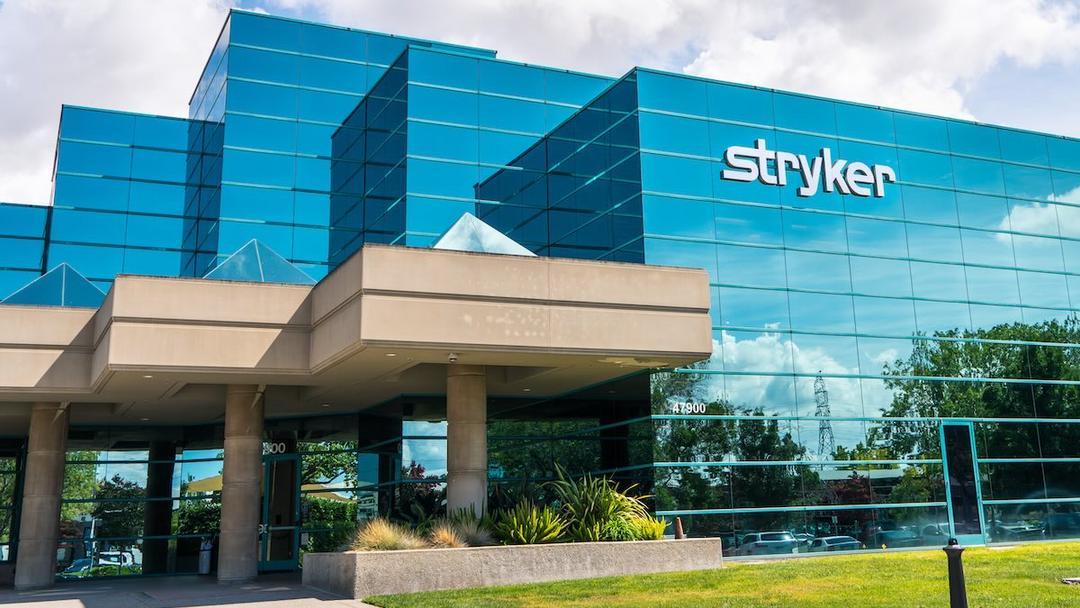
Stryker Iran-Linked Cyberattack was disclosed after the medical device maker reported a cybersecurity incident affecting parts of its corporate IT environment. The company initiated containment, engaged external forensics, and notified authorities. Attribution remains under investigation, though researchers have pointed to Iran-aligned activity consistent with healthcare-targeted intrusions.
Stryker said there is no indication its medical devices were compromised. The firm added that manufacturing and distribution continue to operate, with some business systems undergoing restoration and hardening.
Investigators are assessing whether any data was exfiltrated. The company committed to notifying impacted parties and regulators if required under applicable laws.
CATEGORY: Cyber Threats — Nation-State & APT Attacks; Industry Security — Healthcare Security
Stryker Iran-Linked Cyberattack: What You Need to Know
- The incident hit corporate IT systems; devices and patient care remain unaffected as investigation and recovery continue.
Recommended tools to strengthen healthcare cyber defense:
- Harden endpoints with Bitdefender to block ransomware and APT tradecraft.
- Reduce attack surface using Tenable Vulnerability Management for continuous asset risk visibility.
- Implement strong credentials with 1Password across clinical and corporate users.
- Protect network uptime with Auvik for real‑time network monitoring and incident triage.
- Secure email against spoofing with EasyDMARC to prevent account takeovers and phishing.
- Encrypt and control files with Tresorit Business for compliant data sharing.
- Automate offsite backups via IDrive to speed recovery and reduce downtime.
- Detect exposed personal data with Optery to cut social engineering risk.
Incident scope and timeline
Stryker isolated affected corporate systems after detecting malicious activity and activated its incident response plan.
Third-party forensics and legal counsel were engaged to support investigation, containment, and notifications. Business applications are being restored in phases with added controls.
The company reported no disruption to clinical devices or implantable products. There is no evidence of impact to patient care at this stage, aligning with recent sector responses to targeted intrusions.
Attribution and tradecraft
While Stryker has not confirmed attribution, multiple healthcare intrusions in recent years have been linked to Iran-aligned groups using living-off-the-land techniques, spearphishing, and credential theft.
Similar operations have targeted healthcare and life sciences for espionage and disruption. Notably, industry reporting has tracked Iranian clusters such as MuddyWater and OilRig using PowerShell-based loaders, DNS tunneling, and cloud abuse for persistence and exfiltration.
For reference, see MITRE ATT&CK group documentation for Iranian activity sets and sector advisories from HHS and CISA that outline common techniques against healthcare networks.
Impact on data, devices, and operations
Stryker’s ongoing review includes assessing potential data exfiltration from corporate IT. The company stated its medical device ecosystem is segmented and monitored, and that device safety and efficacy remain intact.
Manufacturing continuity plans reduced operational impact, with logistics and supplier coordination maintained during system restoration.
Similar healthcare incidents have escalated quickly when attackers pivot to operational technology or vendor platforms. Recent cases illustrate the risk to hospital workflows and third-party dependencies, including large providers facing care delays and network isolation events.
Regulatory and law enforcement coordination
Stryker notified relevant regulators and law enforcement and will issue breach notifications if legally required.
Healthcare entities operating under HIPAA and global privacy laws must follow strict timelines and evidence standards for incident disclosure and patient notification.
Federal guidance advises rapid engagement with the FBI and CISA to enable deconfliction and coordinated defense. Sector-specific resources from HHS HC3 provide threat briefings tailored to healthcare delivery organizations and medical technology manufacturers.
Mitigation measures and recommended defenses
Stryker reported it has enhanced access controls, rotated credentials, and expanded endpoint telemetry across impacted segments. The company is prioritizing patching of externally exposed services, hardening identity providers, and tightening vendor access.
Healthcare security teams should consider:
- Identity-first controls with phishing-resistant MFA and conditional access.
- Network segmentation between corporate IT, R&D, and clinical device environments.
- Continuous vulnerability management and attack surface reduction.
- EDR/XDR tuned for living-off-the-land detections and cloud audit logs.
- Immutable backups and tested recovery runbooks for critical systems.
- Threat hunting for Iranian APT TTPs mapped to ATT&CK.
Related reporting: sector impacts in a recent provider breach are detailed in our coverage of the Ascension data breach. For Iran-linked TTPs, see our analysis of MuddyWater’s Bugsleep implant. Broader patient data exposure risks are outlined in this Connecticut healthcare breach report.
Authoritative resources: consult the HHS HC3 cybersecurity resources for healthcare at HHS HC3 and CISA’s sector guidance at CISA Shields Up.
Implications for healthcare and medical device ecosystems
Nation-state activity targeting healthcare threatens intellectual property, supply chains, and care continuity.
For device manufacturers, a medical device cybersecurity breach can spill into regulated product lines if segmentation and SBOM-driven patch processes are weak. Stronger identity controls and vendor governance can curb lateral movement and data theft.
However, aggressive hardening can slow R&D workflows and partner integrations, increasing operational friction. Balancing zero trust adoption with clinical usability is essential.
Investments in detection engineering and recovery automation reduce downtime without overhauling every legacy platform at once, enabling risk-based modernization.
Strengthen incident response before the next alert:
- Map exposures with Tenable Security Center for on‑prem and hybrid estates.
- Lock down shared secrets using Passpack enterprise password management.
- Gain network visibility and faster MTTR with Auvik.
- Encrypt sensitive files and collaborate securely via Tresorit for Teams.
- Harden endpoints and servers with Bitdefender.
- Automate backups and restores through IDrive.
Conclusion
Stryker continues to investigate the Stryker Iran-Linked Cyberattack with external experts and authorities. Early containment limited impact to corporate IT with no device compromise reported.
Healthcare and medical technology organizations remain prime targets for Iran-linked cyber attack healthcare campaigns. Segmentation, identity security, and resilient backups remain decisive controls.
Maintaining clear communications with customers, regulators, and partners is critical. Transparent updates and timely notifications will determine long-term trust and compliance outcomes.
Questions Worth Answering
What systems were affected in the Stryker incident?
– Corporate IT systems experienced disruption; medical devices were not impacted, according to the company.
Is there confirmed Iran-linked attribution?
– Attribution is unconfirmed. Researchers noted overlaps with known Iranian APT techniques used against healthcare.
Was patient data accessed or stolen?
– The investigation is ongoing. Stryker committed to notifying impacted parties if data exposure is identified.
Are Stryker’s medical devices safe to use?
– The company reported no evidence of device compromise and continued product operations.
What mitigations did Stryker implement?
– Isolation, credential resets, expanded monitoring, phased restoration, and accelerated patching of exposed services.
Which defenses best counter Iranian APTs?
– Identity-first zero trust, segmentation, EDR/XDR tuned to living-off-the-land, and robust backup/recovery.
Where can healthcare teams find guidance?
– Refer to HHS HC3 and CISA Shields Up sector resources.
About Stryker
Stryker is a global medical technology company specializing in orthopedic implants, surgical equipment, and neurotechnology solutions. Its products support hospitals, ambulatory centers, and clinicians worldwide.
The company operates manufacturing, R&D, and distribution networks across multiple regions. It emphasizes quality, safety, and regulatory compliance across its product lifecycle.
Stryker partners with healthcare providers and researchers to advance patient outcomes. Its portfolio includes implants, instruments, navigation systems, and connected surgical platforms.
More trusted solutions for your security stack: Try 1Password, monitor with Auvik, and secure files via Tresorit.