 Penelope Iroko
 Table of Contents
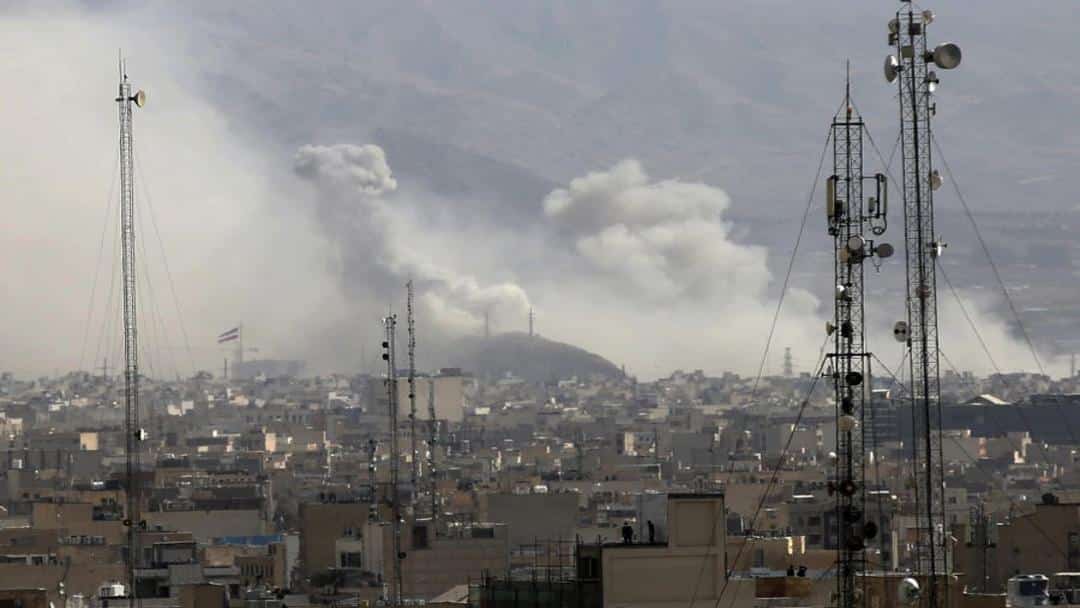
An Iran internet blackout has reduced national connectivity to just 4% as U.S. military operations commence under Operation Epic Fury. Network monitoring data from independent watchdogs confirms the dramatic shutdown began at 07:00 UTC on 28 February 2026, affecting millions across the country.
The pattern of entire regions going offline simultaneously indicates government-imposed restrictions rather than technical failures.
NetBlocks, an independent internet watchdog monitoring cybersecurity and internet governance in real-time, documented the connectivity collapse through its Internet Observatory platform.
Cloudflare Radar confirms internet traffic is close to zero across all major regions, with Tehran, Fars, Isfahan, Alborz Province, and Razavi Khorasan experiencing near-complete shutdowns.
The Iran internet blackout raises serious questions about information control during military conflict, particularly as the shutdown coincides with what President Donald Trump confirmed as major military operations against Iran.
Iran Internet Blackout: What You Need to Know
- Iran’s connectivity collapsed to 4% as Operation Epic Fury military operations begin, blocking 96% of the population from internet access.
🔒 Protect Your Organization During Heightened Threat Periods:
- Bitdefender – Advanced endpoint protection against nation-state threats
- 1Password – Secure credential management for enterprise teams
- CyberUpgrade – Comprehensive cybersecurity compliance solutions
- Tenable – Vulnerability management and threat assessment
- Auvik – Network monitoring and infrastructure visibility
- IDrive – Secure cloud backup for business continuity
Network Data Reveals Unprecedented Connectivity Collapse
The Iran internet blackout represents one of the most severe nationwide internet restrictions documented in recent years. NetBlocks confirmed through X (formerly Twitter) that network data shows Iran in the midst of a near-total internet blackout with national connectivity at 4% of ordinary levels.
The organization noted the incident comes amid U.S. and Israeli combat operations and matches measures used during last year’s war with Israel.
Cloudflare Radar’s real-time data provides additional confirmation. The platform tracks global internet traffic patterns and identified close to zero traffic across all major Iranian regions.
The sharp, coordinated shutdown suggests deliberate action by Iranian authorities rather than gradual decline.
The BBC managed brief connections with Iranian contacts using SpaceX’s Starlink satellite internet service, though these proved intermittent and unreliable. Whether satellite connectivity will continue functioning or Iranian authorities will block these signals remains unclear.
Operation Epic Fury Iran: Military Context Behind the Shutdown
President Donald Trump confirmed U.S. military forces commenced major military operations in Iran under the codename Operation Epic Fury.
The Department of Defense provided limited details about scope and objectives, but the timing with the Iran internet blackout is unmistakable.
Iran has implemented widespread internet restrictions before. The current shutdown escalates measures the Iranian regime first implemented on 8 January 2026, following national domestic protests.
Those earlier shutdowns were partial and targeted specific regions or platforms, but the current blackout is far more comprehensive.
The remaining 4% connectivity likely belongs to government, military, and official sources. This creates a highly controlled information environment where only state-sanctioned communications flow freely while the general population remains cut off.
Cybersecurity Implications of the Iran Internet Shutdown
The Iran internet blackout carries significant cybersecurity implications beyond communication restrictions.
Evan Schuman, a reporter for CSO Online, predicted during earlier Iranian internet shutdowns that the signal-to-noise ratio flip could allow digital fingerprinting of key paths that Iranian state actors use.
This observation is particularly important because Iran is a major player in offensive cybersecurity operations. Advanced Persistent Threat (APT) groups routinely co-opt benign government infrastructure to launch attacks, hiding among legitimate traffic.
Kaveh Ranjbar, CEO of Whisper Security, explained that a connection from the Ministry of Agriculture might not be a farmer, it’s likely a tunnel for a state actor needing an exit node.
When these servers become the only route available during an internet shutdown, they reveal true intent rather than hiding it. Cybersecurity professionals can now more easily identify state actor connections because normal civilian traffic providing cover has disappeared.
Understanding cyber incident response fundamentals becomes crucial for organizations dealing with potential Iranian cyber threats during this period.
Hacktivist Activity Spike Expected
Lisa Forte, partner at Red Goat Cyber Security, warned that conflicts typically trigger spikes in cyberattacks. This includes nation-state activity, but often sharp rises in cyber hacktivist activity occur. The cyber-impact will likely extend beyond military operations themselves.
Hacktivists worldwide, supporting either side, can cause significant disruption, service unavailability, website defacement, and data theft.
These actors operate on ideological motivations without official state backing, making actions unpredictable and potentially widespread. Similar patterns emerged during the Gazprombank cyberattack disruptions affecting the financial infrastructure.
Organizations with connections to Iran, Israel, or the United States should review their incident response procedures and ensure robust cybersecurity defenses. Coming days may see increased scanning, probing, and attack attempts from multiple sources.
Strategic Reasons Behind Internet Control
Iran’s comprehensive internet blackout serves multiple strategic purposes. The most obvious is narrative control—shutting down internet access limits information flow contrary to official positions on military operations.
Citizens cannot easily share videos, photographs, or ground reports. International journalists cannot communicate with sources inside the country. This information vacuum allows tighter government control over what the population knows.
Beyond narrative control, the Iran internet blackout likely serves as a cyber-defense measure. Taking the country largely offline limits both reconnaissance and actual cyberattacks against critical infrastructure.
This defensive posture makes sense given Iran would expect sophisticated cyberattacks accompanying military operations. Both the United States and Israel possess advanced cyber capabilities demonstrated in previous conflicts.
Impact on Iranian Citizens and Businesses
The human cost extends far beyond military and political considerations. Millions of ordinary Iranians cannot communicate with family abroad, conduct business, or access information.
Modern economies rely heavily on internet connectivity. E-commerce, banking, logistics, and countless sectors halt without reliable access. Iranian businesses depending on international communications face severe disruption with lasting financial consequences.
Educational institutions moved toward online learning cannot function. Students cannot access materials, submit assignments, or attend virtual classes. Healthcare providers relying on telemedicine face similar challenges.
Social and Psychological Effects
The psychological impact of sudden disconnection should not be underestimated. Being abruptly cut off creates anxiety, uncertainty, and isolation.
Families with members abroad cannot check on safety or share news about wellbeing. The stress of not knowing adds to anxiety from living in a conflict zone. Social movements relying on digital coordination find capabilities severely hampered—likely an intentional effect.
Implications of the Iran Internet Shutdown
Advantages of Internet Restrictions During Conflict
From a government perspective, the Iran internet blackout offers tactical advantages during military operations. It complicates enemy intelligence gathering, as hostile forces cannot easily communicate with sources inside the country or gather real-time operational effectiveness data. This fog of war may benefit defensive forces.
The shutdown protects critical infrastructure from cyberattacks by making most systems unreachable externally. While a blunt instrument, it eliminates certain attack vectors entirely. For a nation facing operations from technologically superior adversaries, this defensive approach may seem prudent.
Restricting internet access prevents panic and misinformation spread among civilians. Rumors and unverified reports cannot circulate easily without social media or messaging platforms, allowing government communications to dominate.
Disadvantages and Long-Term Consequences
Disadvantages of comprehensive restrictions are substantial. Economic damage accumulates rapidly when businesses cannot operate normally, with losses taking months or years to recover. International companies may reconsider presence in markets so abruptly disconnected.
The Iran internet blackout damages international reputation and business trustworthiness. Companies require reliable infrastructure, and willingness to shutdown the entire internet demonstrates reliability cannot be guaranteed. This may accelerate foreign investment departure.
From a cybersecurity perspective, the shutdown paradoxically makes certain surveillance easier. State actors continuing operations stand out more clearly when civilian traffic disappears, potentially compromising operational security for Iranian intelligence services.
Heavy-handed information control erodes government legitimacy over time. Citizens unable to trust government for truthful information become more skeptical and resistant to official narratives.
🛡️ Strengthen Your Cybersecurity Posture:
Conclusion
The Iran internet blackout represents significant escalation in government information control during military conflicts. With national connectivity at just 4%, Iran has effectively isolated itself from the global internet while Operation Epic Fury unfolds.
This action limits intelligence gathering, protects infrastructure from cyberattacks, and controls narratives presented to Iranian citizens.
Cybersecurity implications extend well beyond Iran’s borders. Organizations worldwide should expect increased hacktivist activity and potential cyberattacks from actors supporting different conflict sides.
The unique signal-to-noise ratio may expose Iranian state cyber operations normally hidden among civilian traffic, potentially compromising APT group methods and infrastructure.
Millions of ordinary Iranians face economic hardship, social isolation, and psychological stress from disconnection during conflict. Long-term consequences for Iran’s economy, international reputation, and domestic legitimacy may prove more damaging than immediate tactical advantages. This remains a developing story.
Questions Worth Answering
What caused the Iran internet blackout?
- A government-imposed shutdown reduced connectivity to 4%, coinciding with U.S. Operation Epic Fury military operations.
Can Iranians still access the internet during the blackout?
- Most cannot. Remaining 4% connectivity belongs to government and military sources. Starlink offers intermittent access.
How does the shutdown affect cybersecurity globally?
- Iranian state cyber actors become more visible without civilian traffic cover, enabling easier tracking of operations.
What is Operation Epic Fury?
- The codename for major U.S. military operations in Iran confirmed by President Trump and the Department of Defense.
How long will the Iran internet blackout last?
- No timeline exists. Duration likely depends on military operations continuation and government assessment.
What are the economic consequences?
- Severe impact on e-commerce, banking, and logistics. Financial losses may take months or years to recover fully.
How can organizations protect against related cyber threats?
- Review incident response procedures, strengthen defenses, monitor unusual activity, and prepare for hacktivist attacks.
About NetBlocks
NetBlocks is an independent internet watchdog organization monitoring cybersecurity and internet governance globally in real-time. The organization specializes in tracking government-imposed internet shutdowns using sophisticated network measurement data and web analytics tools.
NetBlocks has built a reputation for reliable, independent reporting on internet freedom issues. Their methodology distinguishes between technical failures and deliberate government actions, cited by international media, human rights groups, and policymakers.
By providing transparent, data-driven insights into internet shutdowns, NetBlocks documents government censorship and information control, helping hold authorities accountable.
About Davey Winder
Davey Winder is a veteran cybersecurity writer, hacker, and analyst contributing senior-level analysis to Forbes. With decades of information security experience, Winder brings technical expertise and investigative rigor to reporting on cyber threats and vulnerabilities.
Throughout his career, Winder developed a reputation for balanced, well-researched reporting addressing genuine security concerns. He regularly interviews cybersecurity professionals and analyzes threat intelligence.
His reporting on the Iran internet blackout demonstrates ability to connect technical network data with broader geopolitical and cybersecurity implications for comprehensive understanding.
🚀 More Security Solutions Worth Exploring:
Protect your data with Foxit secure document solutions | Scale team knowledge securely with Trainual | Leverage AI-powered security with BlackBox AI