 Penelope Iroko
 Table of Contents
CrowdStrike lawsuit dismissed by a federal court narrows the legal fallout from July’s global outage. The decision ends an investor class action alleging securities violations. The ruling addresses only shareholder claims tied to the disruption.
The court halted the case at the pleading stage, finding the complaint failed to satisfy federal securities-law standards. The outcome affects investors but does not resolve customer or operational issues.
While headlines read “CrowdStrike lawsuit dismissed,” the implications span shareholder risk, vendor trust, and software update governance across enterprise environments.
CrowdStrike lawsuit dismissed: What You Need to Know
- A federal judge dismissed the investor class action linked to CrowdStrike’s July outage, ruling the complaint insufficient under heightened securities-law pleading requirements.
CrowdStrike lawsuit dismissed: Court’s reasoning and what changed
The court’s order confirms this investor case is closed at the motion-to-dismiss stage. The judge determined the allegations did not meet federal pleading standards.
The decision is limited to claims arising from the outage and does not address customer contracts, technical remediation, or operational performance.
Why investors sued after the outage
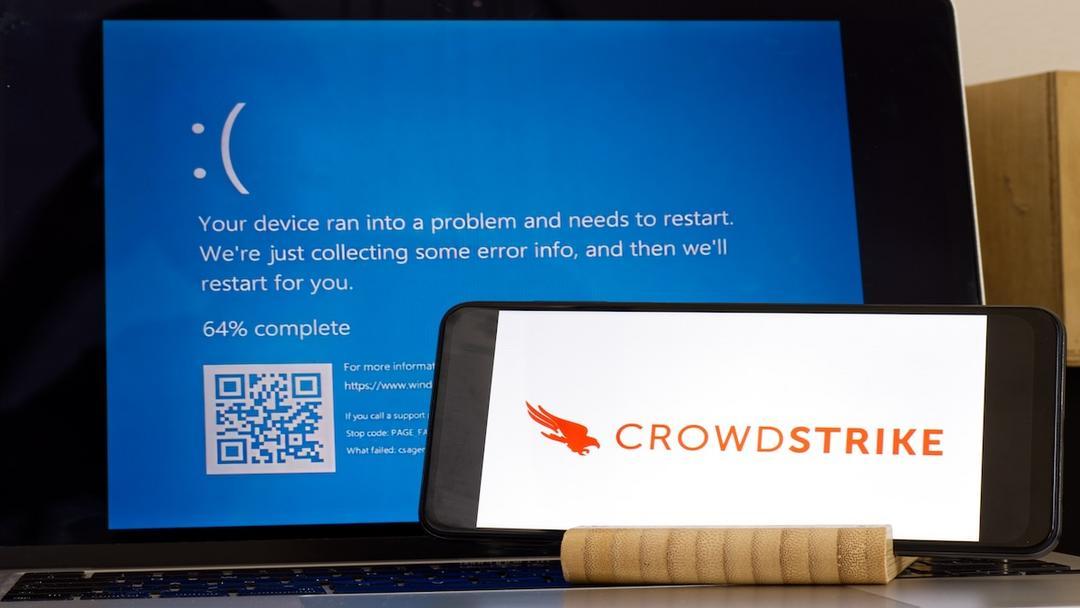
The CrowdStrike outage lawsuit followed a July 19 update that disrupted Windows systems globally. Plaintiffs alleged the company misrepresented product reliability and risk controls, arguing the outage exposed undisclosed weaknesses that harmed valuation.
With the CrowdStrike lawsuit dismissed, the court found the pleadings inadequate at this preliminary stage.
What the court decided
At the motion-to-dismiss checkpoint, courts test whether claims are specific and plausible. Here, the judge concluded investors did not adequately plead their securities theories.
The ruling assesses legal sufficiency only and does not weigh the technical root cause, incident response, or remediation pace.
How the July outage unfolded
The disruption stemmed from a faulty content update affecting Windows endpoints and causing widespread errors. Airlines, hospitals, retailers, and public agencies reported downtime across millions of devices.
CrowdStrike rolled back the update and issued recovery guidance, but the global impact was substantial. The CrowdStrike lawsuit dismissed outcome pertains to investor claims tied to this event.
Timeline highlights
- July 19: A faulty security content update triggered failures across Windows systems.
- Following days: CrowdStrike issued remediation guidance and assisted partners during restoration.
- Aftermath: Investors filed a class action; today’s ruling dismisses that case at the pleading stage.
Industry context and related developments
Update risk remains a systemic challenge. Other vendors have faced rollout issues, underscoring the need for rigorous change control and rollback paths. For example, Tenable temporarily disabled certain Nessus agents after faulty updates, highlighting software assurance complexity in large fleets. See: Tenable disables Nessus agents after faulty updates.
CrowdStrike participates in sector initiatives on AI security benchmarks to improve resilience and standardization. Related reading: AI cybersecurity benchmarks with CrowdStrike and partners.
Microsoft continues to address critical Windows vulnerabilities through regular updates; for context, see: Microsoft patches multiple zero-day flaws.
For broader playbook guidance, review lessons from major incident response cases and Zero Trust architecture for network security, along with what cyber incident response entails.
What happens next for investors and the company
Practically, the CrowdStrike lawsuit dismissed ruling reduces immediate litigation pressure from this investor action. It does not alter how customers assess outage response, product reliability, or communication cadence.
Plaintiffs’ next steps depend on any available appeals or refile options, which were not the focus of this ruling.
For shareholders, the order narrows uncertainty typical in a cybersecurity stock lawsuit after major service disruptions. For customers and partners, trust continues to hinge on transparent updates, hardened QA processes, and tested rollback mechanisms.
Recommended tools to strengthen resilience after large outages:
- Bitdefender — Enterprise-grade endpoint protection to limit update-related blast radius.
- 1Password — Secure credential management for incident-ready access control.
- Passpack — Team password management with permissions and audit trails.
- Tenable — Continuous vulnerability assessment across Windows and cloud assets.
- Tenable Suite — Exposure management to prioritize risk during recovery.
- IDrive — Immutable backups for faster endpoint restoration at scale.
- Auvik — Network monitoring to detect cascading failures early.
Implications for cybersecurity, customers, and investors
The ruling offers near-term clarity for investors. With the CrowdStrike lawsuit dismissed, litigation risk from this specific case declines, which may stabilize sentiment. It also signals how courts scrutinize outage-related securities claims that lack particularized facts.
However, legal clarity does not resolve operational risk. Enterprises will keep assessing vendor update pipelines, staged rollouts, and rollback safety nets to prevent widespread endpoint failures.
For security teams, the outage remains a cautionary case. Even mature vendors can trigger cascading issues through a single flawed content update. Organizations should harden validation gates, segment deployment rings, and rehearse time-bounded rollback procedures.
CISOs and boards should tie these controls to service-level objectives and crisis communications to maintain stakeholder trust during high-visibility incidents, including any future cybersecurity stock lawsuit scenarios.
Build operational resilience with these vetted solutions:
- EasyDMARC — Stop spoofing and strengthen email security posture.
- Tresorit — Encrypted cloud storage for regulated data workflows.
- Optery — Reduce exposed personal data to limit social engineering risk.
- 1Password — Enforce strong secrets hygiene across teams and vendors.
- Bitdefender — Endpoint EDR to contain update-induced instability.
- Tenable — Prioritize vulnerabilities that compound outage impacts.
- IDrive — Rapid restore options for mission-critical endpoints.
Conclusion
The immediate headline; CrowdStrike lawsuit dismissed; closes one chapter in the legal response to the July disruption. The decision is limited to investor claims and does not judge technical causes or recovery.
Customers will continue to evaluate uptime, change-control rigor, and transparency during incidents. Investors will focus on execution, product assurance, and disciplined communication after outages and any CrowdStrike outage lawsuit developments.
Resilience remains the benchmark. Trust is earned through rigorous testing, staged rollouts, audited rollbacks, and clear post-incident reporting at global scale.
Questions Worth Answering
What does “CrowdStrike lawsuit dismissed” signify?
– A federal court ended the investor class action at the pleading stage for failing to meet securities-law standards.
Does the ruling cover customer or operational disputes?
– No. It addresses only investor claims tied to the outage, not customer, technical, or contractual matters.
Is this the end of the CrowdStrike outage lawsuit?
– This ruling ends the investor case discussed here. Other actions, if any, follow separate timelines.
How does this inform a cybersecurity stock lawsuit?
– It shows courts may dismiss outage-driven securities claims early if allegations lack particularized facts.
What caused the July outage?
– A faulty content update for Windows systems triggered widespread endpoint failures before rollbacks and remediation.
What should enterprises do now?
– Strengthen change management, test rollback paths, segment deployments, and rehearse incident response at scale.
Does the ruling change CrowdStrike’s obligations?
– No. Operational responsibilities to customers and partners remain unchanged by this investor decision.
About CrowdStrike
CrowdStrike provides a cloud-native platform for endpoint protection, threat detection, and incident response across enterprise environments.
The company secures endpoints, identities, and cloud workloads, aiming to reduce dwell time and accelerate containment.
As a sector leader, CrowdStrike collaborates on standards and benchmarks to improve resilience and response coordination globally.
More smart picks: Plesk, CloudTalk, Blackbox AI — streamline operations and secure your stack.