 Penelope Iroko
 Table of Contents
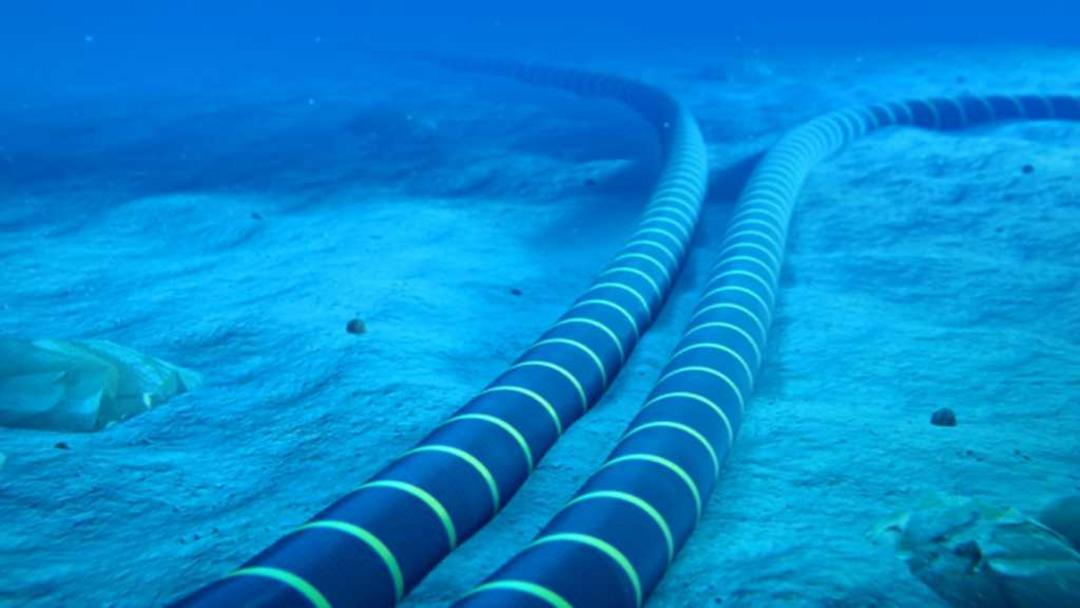
Submarine cable cybersecurity is now central to safeguarding the world’s primary internet backbone. Recent disruptions underscore escalating physical and cyber risks to undersea networks. Operators and governments are accelerating resilience efforts across design, monitoring, and rapid repair.
With 95–99% of global data transiting 650 privately operated systems, any outage can ripple across cloud, finance, and telecom. The latest incidents highlight urgent needs for redundancy, governance, and incident response.
Policy momentum is rising, but execution depends on operators integrating physical defenses with rigorous cyber controls across IT and OT environments.
Submarine Cable Cybersecurity: What You Need to Know
- Submarine cable cybersecurity demands integrated physical safeguards, robust cyber controls, and rehearsed recovery to keep global connectivity resilient.
Recommended Security and Resilience Solutions
- Bitdefender – Advanced endpoint protection and threat prevention.
- 1Password – Enterprise-grade password and secrets management.
- Auvik – Network monitoring to boost visibility and uptime.
- IDrive – Secure backup to protect against data loss.
- Tenable Nessus – Industry-standard vulnerability scanning.
- Tenable One – Exposure management across hybrid environments.
- EasyDMARC – Email authentication to block spoofing.
- Tresorit – Encrypted cloud storage for sensitive data.
What the Latest Incidents Reveal
Suspected sabotage, unexplained damage, and multiple breaks in the Baltic since 2022 have elevated risk awareness. These Baltic Sea cable attacks show how physical tampering, accidental harm, and cyber operations intersect.
Effective submarine cable cybersecurity must maintain service continuity under duress while meeting national and enterprise connectivity requirements.
Analysis from the Atlantic Council notes that authoritarian states may seek leverage through routing influence or infrastructure access via aligned firms.
As cloud, 5G, and IoT traffic grows, data sensitivity in transit increases, making submarine cable cybersecurity a board-level priority. The council outlines a strategy in A Cable Corridor Strategy.
The EU and Policy Momentum
The European Union’s Cable Security Action Plan ties physical robustness to cyber resilience.
With most assets privately owned, policy can steer investment, but day-to-day submarine cable cybersecurity depends on operator design choices, operational monitoring, and fast recovery that limit single points of failure.
How Operators Are Responding
Large technology firms reportedly grew from about 10% to 71% of international capacity in a decade. Google prioritizes route diversity, cable shielding, and burial to mitigate fishing and anchoring risks, combined with software control planes that reroute traffic during faults.
This approach places submarine cable cybersecurity at the core of network engineering. For a market overview, see TeleGeography’s Submarine Cable Map.
Telxius: Resilience Across the Atlantic
Spain-based Telxius views subsea systems as the backbone linking landing stations and strategic data centers.
The company emphasizes redundancy against fishing, anchoring, earthquakes, and landslides, with transatlantic Marea and Dunant systems engineered for diverse paths and rapid failover.
Its model combines landing-station hardening with multilayer cyber monitoring, audits, scenario testing, crisis protocols, workforce training, and AI/ML-driven detection, an integrated approach to submarine cable infrastructure protection that strengthens submarine cable cybersecurity across IT and OT domains.
Relevant threat context
The broader telecom threat landscape reinforces the need for submarine cable cybersecurity. See internal coverage on PRC cyber espionage targeting telecoms, evolving 5G risks and opportunities, and zero-trust architecture for subsea operations.
Additional context includes industrial control systems patching trends and the CISA cloud security mandate that can inform resilience planning.
Designing for Defence-in-Depth
Resilient submarine cable cybersecurity relies on defense-in-depth rather than any single control. Operators combine diverse routes, proactive anomaly monitoring, hardened remote management, and rapid repair readiness.
They align landing-station physical security with enterprise-grade cyber controls, using AI/ML to cut dwell time and accelerate response. For response planning, see guidance on DDoS incident response.
- Engineer resilience: Multi-path routing, shielding, and burial reduce common hazards while supporting immediate traffic redistribution to sustain submarine cable cybersecurity.
- Operationalize readiness: Continuous audits, cross-operator drills, spares staging, and disaster recovery plans prevent incidents from cascading into regional outages.
- Elevate people and process: Role-based training, access segmentation, and tested playbooks cut social engineering risk and sharpen submarine cable cybersecurity during crises.
Implications for Critical Infrastructure and Business
Persistent investment in redundancy, monitoring, and coordinated incident response delivers measurable benefits. Stronger submarine cable cybersecurity reduces downtime risk, protects sensitive cross-border data flows, and supports economic stability.
Enterprises gain predictable performance for cloud and SaaS, while governments improve national resilience for essential services.
Costs remain high and unevenly distributed. Complex, multinational ownership can slow upgrades and complicate accountability. Geopolitical screening and vendor trust assessments add friction to cross-border builds.
Without shared standards and transparent testing, submarine cable cybersecurity may advance unevenly, creating exploitable gaps that undermine submarine cable infrastructure protection.
Enhance Your Cyber Resilience Toolkit
- Passpack – Team password management with secure sharing.
- Optery – Automated personal data removal for executives.
- Tresorit Business – End-to-end encrypted collaboration.
- Plesk – Secure server and web hosting control.
- CloudTalk – Secure cloud calling with monitoring.
- KrispCall – Business VoIP with compliance features.
- EasyDMARC – Protect domains and prevent spoofing.
Conclusion
Subsea systems quietly carry most of the world’s digital life. Each incident, from the Baltic Sea to the Atlantic, reinforces that submarine cable cybersecurity is an engineering and operational discipline, not an assumption.
The path forward pairs physical hardening, route diversity, and secure remote operations with telemetry-rich monitoring and rehearsed recovery.
Public policy can set expectations, but submarine cable cybersecurity depends on operator execution and cross-industry collaboration.
When industry and government align on transparent testing, information sharing, and rapid repair, submarine cable infrastructure protection becomes a dependable foundation for cloud, 5G, and global commerce.
Questions Worth Answering
Why are submarine cables considered critical infrastructure?
- They carry the vast majority of global data, underpinning internet access, finance, cloud services, and intercontinental communications that depend on submarine cable cybersecurity.
What caused recent disruptions in the Baltic Sea?
- Multiple breaks were recorded. Investigations weigh accidental damage and potential state-linked activity. Attribution remains complex amid wider Baltic Sea cable attacks.
How does redundancy improve submarine cable cybersecurity?
- Diverse routes, automatic failover, and spare capacity enable instant traffic rerouting when damage occurs, limiting downtime and data disruption.
What are operators like Google and Telxius doing?
- They invest in route diversity, shielding, burial, multilayer monitoring, and rapid recovery to strengthen end-to-end submarine cable cybersecurity.
How do 5G and cloud services affect risk?
- They increase volume and sensitivity of data in transit, raising stakes for submarine cable cybersecurity and operational hardening.
What role does policy play?
- Action plans align standards and incentives, but private operators must implement controls, test frequently, and maintain repair readiness.
Can AI and machine learning help?
- Yes. AI/ML speeds anomaly detection, triage, and response across complex environments, enhancing submarine cable cybersecurity and reducing dwell time.
About Telxius
Telxius is a global telecommunications infrastructure company and a subsidiary of Telefónica. It operates key submarine cable systems connecting the Americas and Europe.
The company focuses on resilient, diverse routes and high-availability services for carriers, hyperscalers, and enterprises across the Atlantic and beyond.
Telxius combines physical measures at landing stations with multilayer cyber defenses, audits, and AI/ML monitoring to support reliable connectivity.
About María Ramos Domínguez
María Ramos Domínguez is a journalist contributing to Computerworld and CIO in Spain, covering digital transformation, innovation, and cybersecurity.
She has written for GCiencia, Ethicslab, ITespresso, and Silicon, and contributed to an annotated edition of Jane Austen’s Emma for Sushi Books.
Ramos holds degrees in Journalism from the Universidade de Santiago de Compostela and in Audiovisual Communication from Universidad Carlos III de Madrid.
Explore More Top Picks
Power your stack with Blackbox AI, build courses on LearnWorlds, and streamline onboarding with Trainual.