 Clement Brako Akomea
Table of Contents
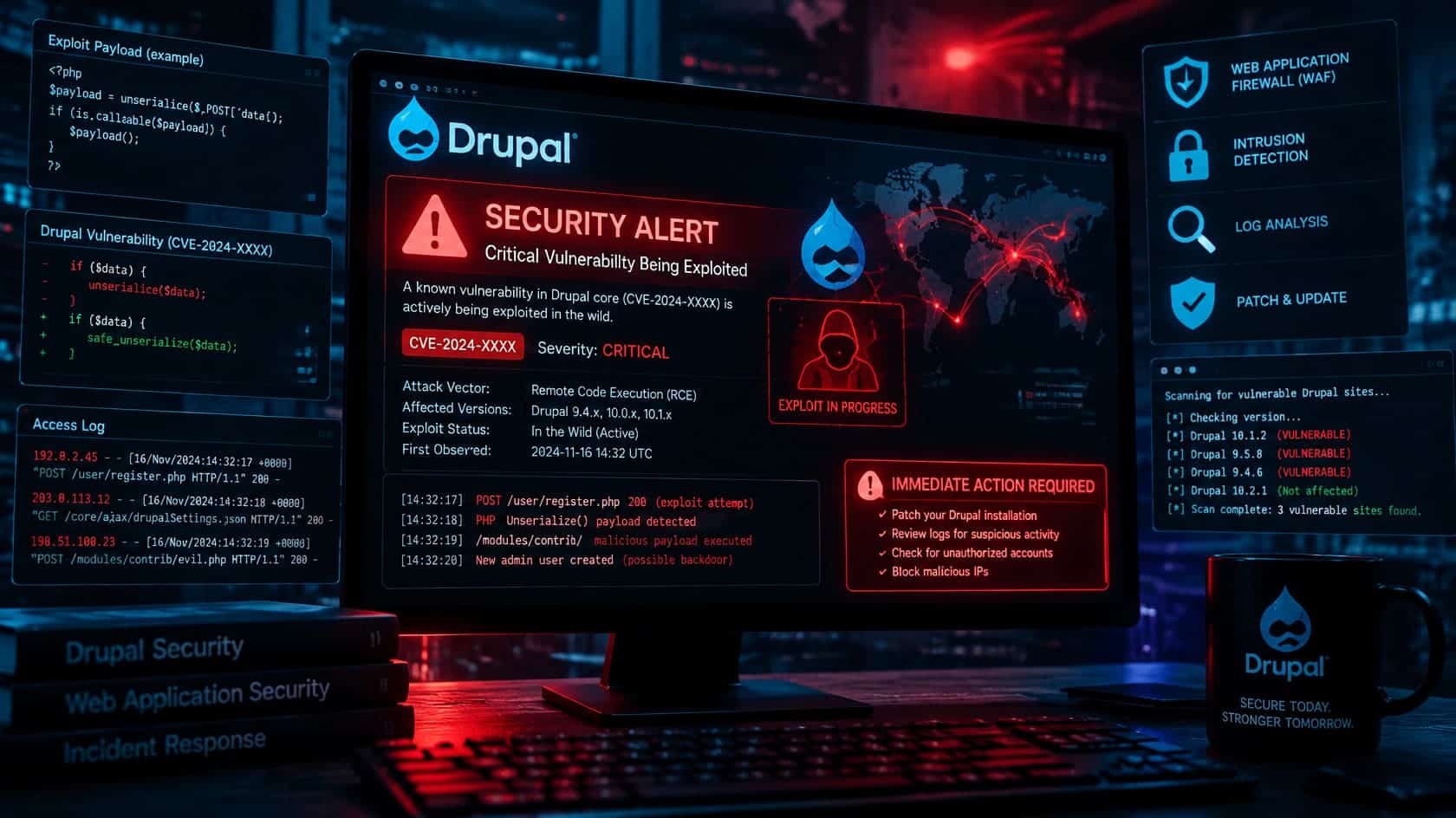
Drupal CVE-2026-136716 is an access bypass in Drupal core that can lead to site takeover, and the project says it is being exploited in the wild. The SA-CORE-2026-019 advisory rates it “Highly critical” and ships fixes in Drupal 11.4.14, 11.3.23 and 10.6.23.
The key detail is that this bug follows an earlier fix that did not close every path. Sites left in an unusual or incomplete install state stayed exposed after SA-CORE-2026-017, and Drupal says any site with a remotely reachable installer after that update may still have been compromised.
Drupal administrators, agencies that host Drupal sites and security teams that run public web properties should act now. This is a follow up to our earlier Drupal installer coverage, because the new advisory brings a new CVE, a new patch and confirmed exploitation.
Drupal CVE-2026-136716: Key Takeaway
- Drupal CVE-2026-136716 means that installing the November 18 fix was not enough, so sites must upgrade again, run the database update and secure the installer.
This section contains affiliate links; we may earn a commission at no cost to you.
Find unpatched systems faster. Tenable provides vulnerability management, which helps teams track exposed software and prioritize patching.
Get help when a site may be compromised. CrowdStrike provides AI native cybersecurity software and incident response services.
What Happened: A Second Drupal Installer Flaw
Drupal published SA-CORE-2026-019 on November 25, 2026. SecurityWeek covered the advisory on November 26.
Timeline
- November 18, 2026: Drupal publishes SA-CORE-2026-017 for CVE-2026-132165, a remote code execution flaw in the installer.
- November 19, 2026: The Drupal Security Team later reports that the earlier flaw was exploited on live sites as early as 19:00 UTC.
- November 24, 2026: Help Net Security and The Hacker News report that CISA added CVE-2026-132165 to its Known Exploited Vulnerabilities catalog, with a federal deadline of November 27.
- November 25, 2026: Drupal publishes SA-CORE-2026-019 for CVE-2026-136716.
Technical details
Drupal core ships an installer file, install.php. The new advisory says sites in unusual or incomplete install states remained open to takeover after the first fix, including production sites. That state is not visible in the admin interface, so administrators cannot assume they are safe by looking at the dashboard.
Drupal rates the flaw “Highly critical 21/25” on its own risk scale. That is not a CVSS score, and the advisory lists no CVSS value. The Hacker News gave a CVSS 9.8 figure for the earlier CVE-2026-132165.
The Earlier Flaw and the Research Behind It
The first flaw, CVE-2026-132165, was credited to Anthropic’s OSS Scanner in the SA-CORE-2026-017 advisory. Researchers at Searchlight Cyber published their own Fail2Install write up on November 24. It describes exhausting system limits so the installer treats an existing site as new, and says the work duplicated the scanner’s report.
The Hacker News reported that the research covers Drupal 8.9, 9, 10 and 11 in the researchers’ test setups. The Searchlight page does not mention active exploitation.
Affected and Fixed Versions
- Affected: Drupal core before 10.6.23.
- Affected: Drupal 11.0.0 up to before 11.3.23.
- Affected: Drupal 11.4.0 up to before 11.4.14.
- Fixed: 10.6.23, 11.3.23 and 11.4.14.
- End of life: Drupal 11.2.x and below, and 10.5.x and below, which the advisory lists without fixes.
Who Is Affected
Any Drupal site on a version listed above can be affected, with the highest concern for sites whose installer may still be reachable. Drupal says sites that already secured the installer are not vulnerable. Sites on end of life branches need a migration plan, since no fix is listed for them.
Steps Administrators Can Take
- Upgrade to Drupal 11.4.14, 11.3.23 or 10.6.23.
- Run update.php after upgrading. Drupal says the update hook must run to fix existing production sites in the affected state.
- Secure the installer on new and existing sites. Drupal’s installer guidance recommends blocking /core/install.php at the web server, and deleting the file as an extra step.
- Check logs for unauthorized access, especially changes to or by user 1.
- Set the user 1 email to an address you control and consider resetting that password.
- Review Drupal’s “Your Drupal site got hacked. Now what?” guide if you suspect compromise.
- Drupal says sites using Drupal Steward mitigations are protected from known attack vectors, but should still upgrade soon.
Implications
Patching is not always the end
The first fix on November 18 left a path open. Teams that closed the ticket after that update may still be exposed, so confirm the second update and the database step on every environment. Our guide to lessons from major incident response cases shows why verification matters after a fix.
Installer files should not face the internet
A public installer is an unnecessary risk once a site is live. Blocking the path at the web server removes a whole class of attacks. Compare our coverage of a critical ProjectSend vulnerability, where an exposed web application path also mattered.
Exploitation can follow patches quickly
Drupal reports exploitation of the first flaw within a day of the patch. SecurityWeek’s earlier report said no public information was available on those attacks, while Drupal’s advisory states exploitation occurred. Defenders should plan for rapid patch cycles on public CMS sites, backed by a clear incident response process.
This section contains affiliate links; we may earn a commission at no cost to you.
Keep a recovery copy. IDrive offers cloud backup and ransomware recovery, which helps teams restore a site to a known good state after a takeover.
Looking Forward
Drupal has not shared details of the attacks, and it is unclear who is responsible or how many sites were compromised. It is also not reported whether CISA will add CVE-2026-136716 to its catalog. The sources reviewed here mention the catalog entry only for the earlier CVE-2026-132165.
Administrators should watch the Drupal security feed for updates. The advisory remains the main reference, and its guidance on user 1 and log review is the clearest sign of what to check first.
Questions Worth Answering
What is Drupal CVE-2026-136716?
- It is an access bypass in Drupal core that can lead to site takeover, covered by advisory SA-CORE-2026-019.
Is CVE-2026-136716 being exploited?
- Yes. The Drupal advisory states that it is being exploited in the wild.
Which Drupal versions are fixed?
- Drupal 11.4.14, 11.3.23 and 10.6.23.
Which Drupal versions are affected?
- Versions before 10.6.23, from 11.0.0 up to before 11.3.23, and from 11.4.0 up to before 11.4.14.
Do I need to run update.php?
- Yes. Drupal says the update hook must run to fix existing production sites in the affected state.
How is this different from SA-CORE-2026-017?
- The earlier advisory covered CVE-2026-132165, an installer remote code execution flaw. The new one covers sites left in unusual install states after that fix.
What is the CVSS score for CVE-2026-136716?
- The advisory gives no CVSS score. It uses Drupal’s own rating of Highly critical 21/25.
How do I secure the Drupal installer?
- Drupal recommends blocking /core/install.php at the web server, and deleting the file as an added step.
Is Drupal 10.5 or 11.2 supported?
- No. The advisory lists those branches and older ones as end of life.
What should I check if I think my site was hit?
- Review logs for unauthorized access, look at changes to or by user 1, and reset that account’s email and password.
This section contains affiliate links; we may earn a commission at no cost to you.
More tools worth a look: 1Password for logins, Optery for personal data removal and EasyDMARC for spoofed email.